How to Organize a Coffee and Milk Tea Shop Counter: 7 Tips for Faster Service

How to Organize a Coffee and Milk Tea Shop Counter: 7 Tips for Faster Service
During peak hour, a messy counter is not a housekeeping problem – it is a speed problem. Every second a barista spends hunting for a lid or a straw is a second added to the queue. The fix is rarely a bigger shelf; it is a layout built around how drinks are actually made. Here are seven tips that hold up in a working cafe or milk tea shop.
Map the drink flow before you buy anything
Walk through one real order from start to finish: take a cup, add ice or syrup, seal, add a straw, hand it over. Every item you touched belongs within one arm’s reach of the step where you touched it. Anything used only at opening or closing goes off the counter. This exercise tells you how many compartments you actually need – not how many look good in a product photo.
Split the counter into four zones
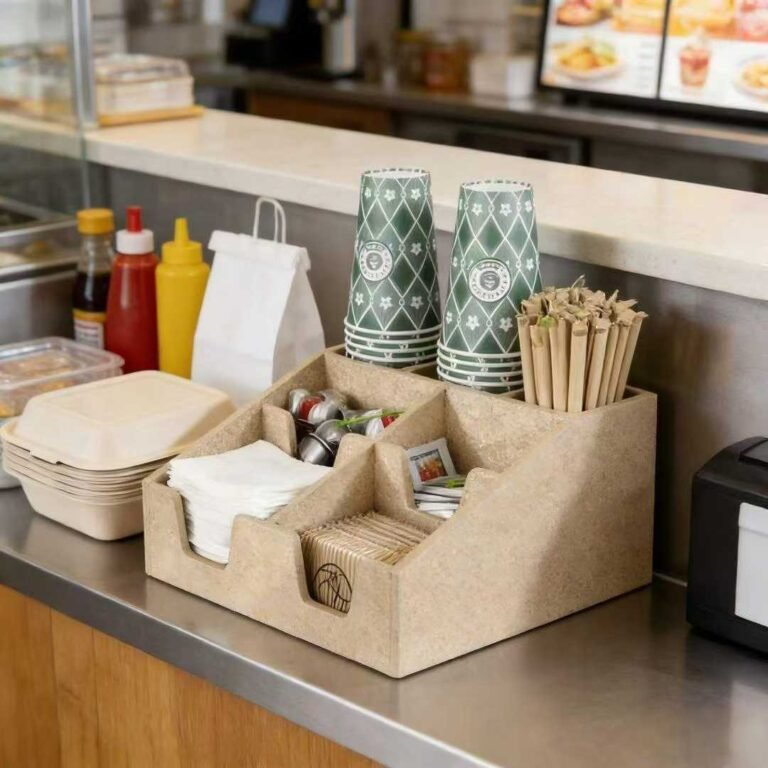
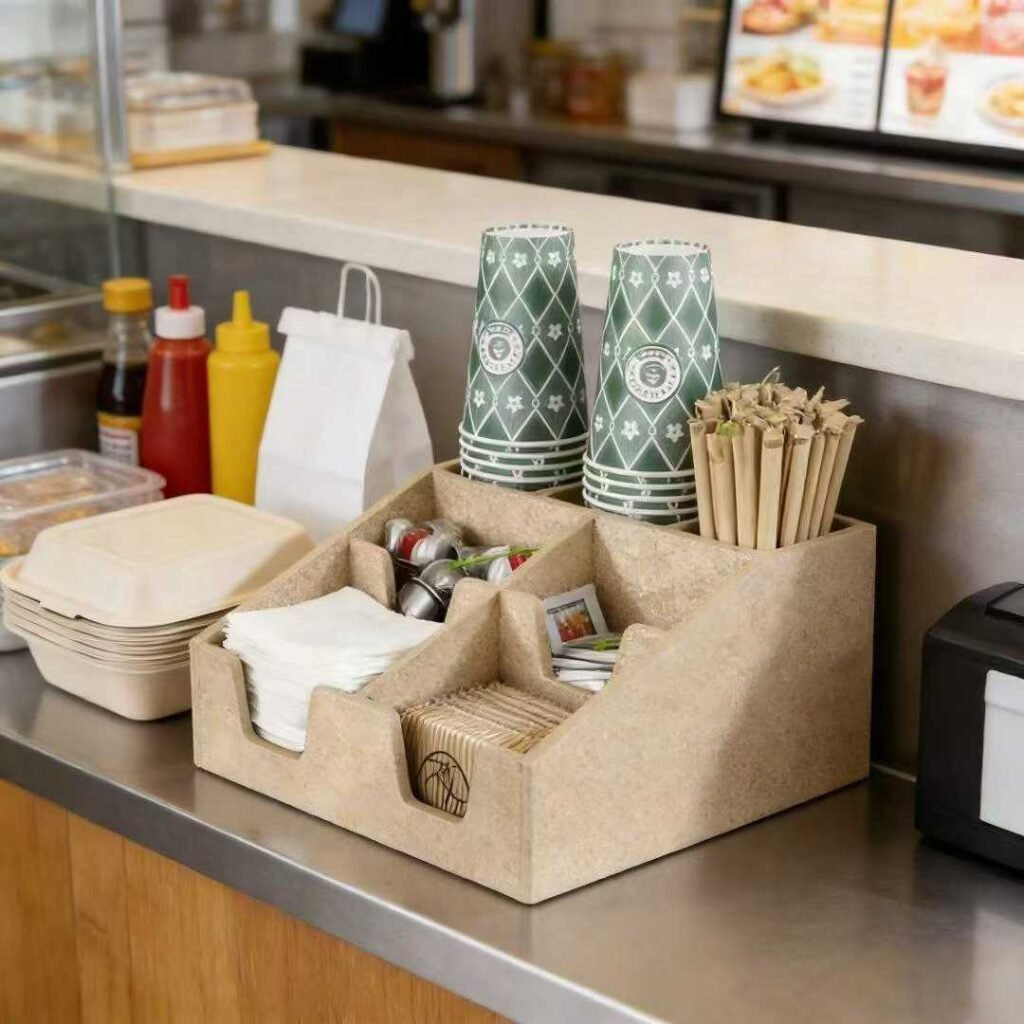
Most high-volume beverage counters break into the same four zones. Give each one a fixed area and never let them mix:https://zspxcraft.com/coffee-condiment-organizer/
- Cups and lids – upright, dry, pulled one at a time.
- Straws, stirrers and napkins – the items grabbed by reflex.
- Sweeteners, creamers and tea bags – small, high-variety, easy to scatter.
- Tools and backup stock – scissors, thermometers, spare sleeves, kept off the main line.
Once each zone has a home, restocking stops being a decision. That matters most when your busiest hours are covered by new hires.
Stand cups upright and keep lids dry
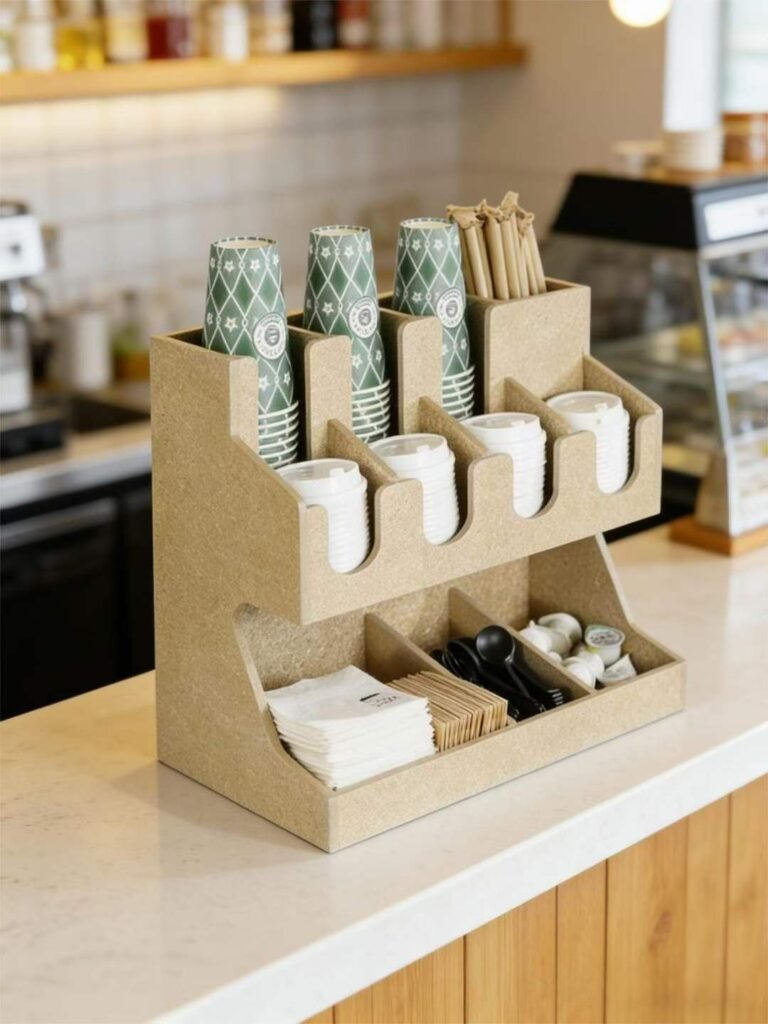
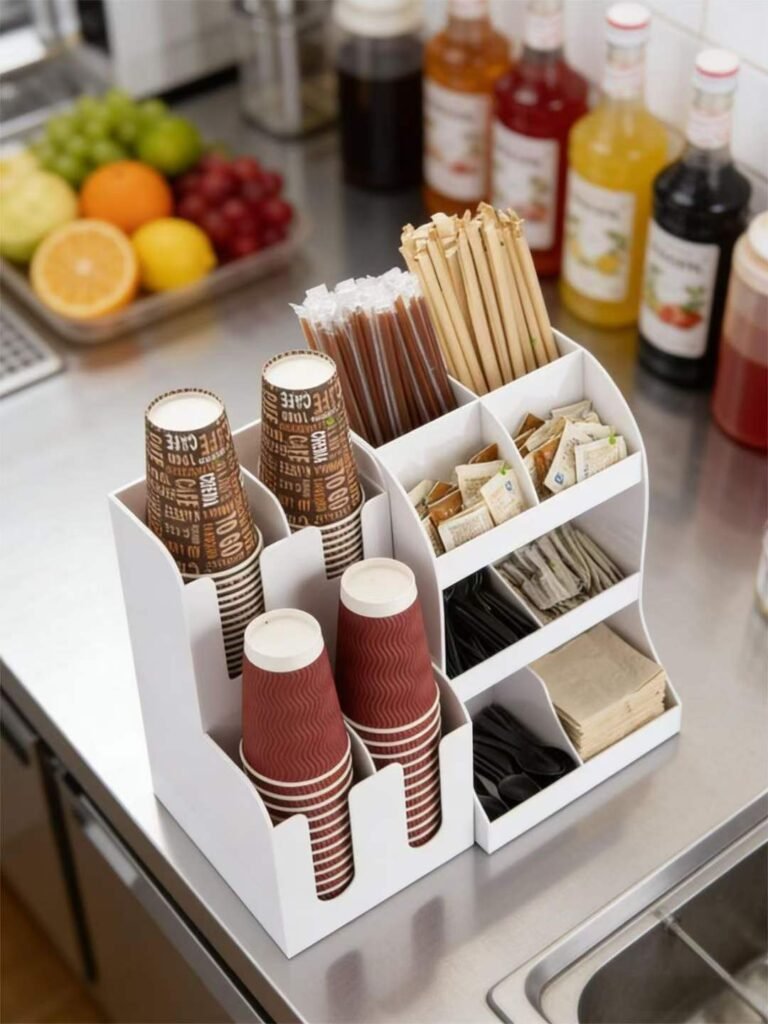
Stacking cups flat saves a little space and costs a lot of time – they tip, they nest too tightly, and the top one gets handled by everyone. Keep cups in an upright bay and give lids their own slot. In milk tea shops especially, wet lids and dry cups should never share a compartment: moisture travels, and damp cups stick together at the worst possible moment.
Put your ten fastest items at hand height
As a working rule, the ten items you reach for most should sit between waist and eye level – roughly where a relaxed hand lands. Reserve the lowest tier for backup stock and the highest for light, rarely touched items. If you catch yourself bending or stretching during peak service, the layout is wrong, not your staff.
Separate by sight, not by labels
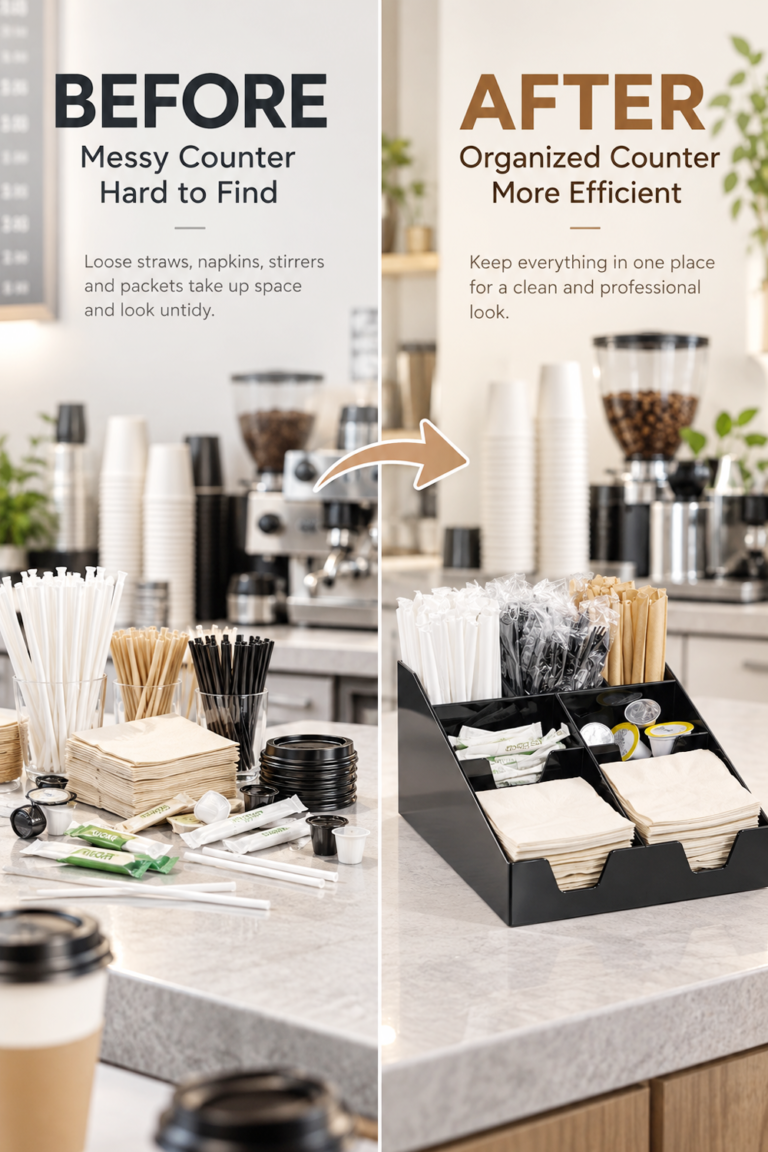
Nobody reads labels at rush hour. Use open compartments with visible dividers instead: the shape and position of each bay tells the brain where to reach before conscious thought kicks in. Store refills behind the front row so the station always looks full from the customer side – and always refill from the back, pulling from the front, so sugar packets do not cake at the bottom of a bay.
Choose organizers that come apart
This is the tip most owners learn the hard way. Sugar dust, dried milk and tea residue collect in corners a fixed rack can never reach. A detachable organizer – one whose tiers and dividers lift out without tools – can be stripped down, wiped flat in a sink and reassembled in minutes. For any shop with a daily cleaning checklist, that is a hygiene feature, not a convenience. It also means the unit ships flat, which matters if you are importing.
Run a five-minute closing reset
At close, do the same four things every day: restock the front row, empty and wipe the drip area, discard any packet that has gone damp, and return stray items to their zone. Five minutes nightly prevents the slow drift that turns an organized counter back into a pile by the end of the month. Re-walk the drink flow whenever the menu changes – a new cup size or seasonal topping breaks the system you just built.

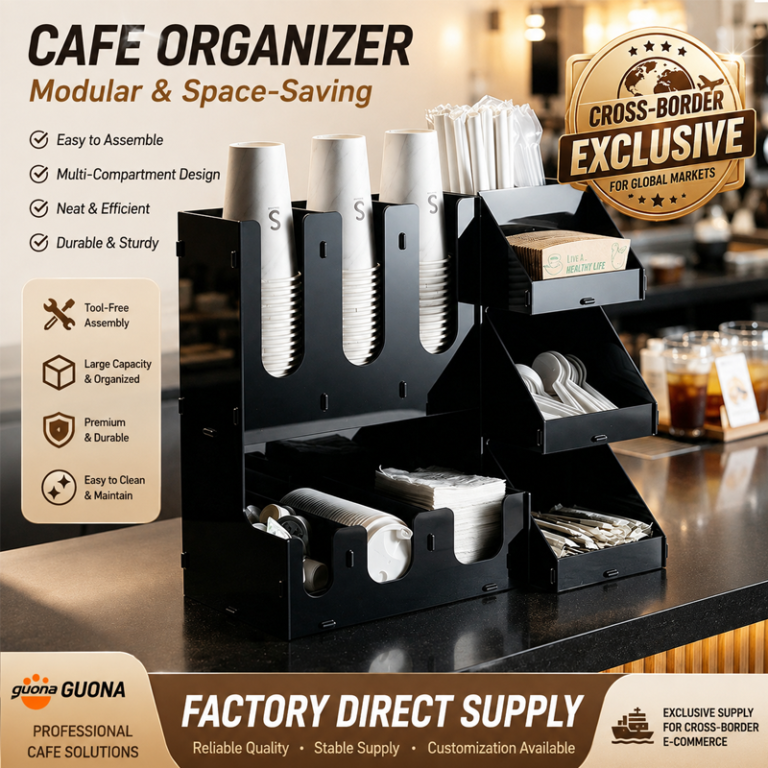
Our detachable multi-tier organizers are built for exactly this kind of counter: upright cup and lid bays, removable dividers for straws and sleeves, a non-slip base that stays put on a busy bar, and tool-free disassembly for end-of-shift cleaning. Because we are the source factory, the compartment layout can follow your drink flow instead of forcing you to adapt to a fixed rack. Send us your counter dimensions and a photo of your current setup, and we will propose a layout.
FAQ
How much counter space does a busy cafe station need?
Less than most owners assume. You need the width of your cup bay plus one hand’s reach on either side. When the counter is short, build upward with tiers instead of outward – and check the clearance under any wall cabinets first.
Should cups and lids share one compartment?
No. Keep them separate and keep lids dry. Moisture from freshly rinsed lids transfers to cups, and damp cups stick together during the rush – the single most common cause of a slowed hand-off.
How often should a commercial beverage station be deep-cleaned?
Wipe surfaces daily and strip the organizer down for a full wash at least weekly – more often in high-volume milk tea and juice service, where sugar residue builds quickly.
CTA
Send us your counter dimensions, cup diameter and daily drink volume. We will propose a compartment layout, send a sample, and quote factory-direct pricing within 24 hours.